What drives industrial demand in BC
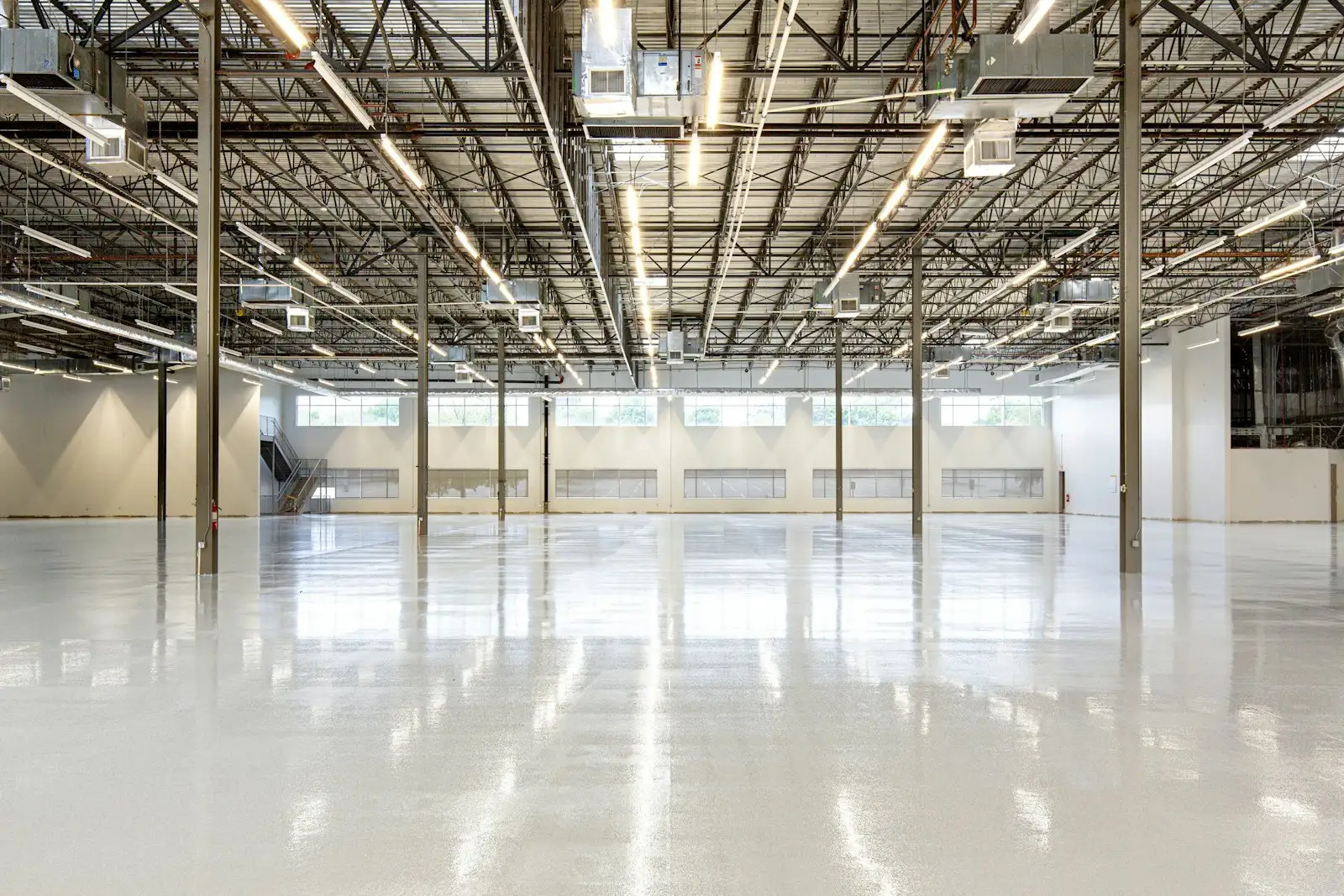
Industrial property covers warehouses, distribution centres, manufacturing and processing plants, contractor yards, flex space and service bays. Demand comes from the businesses that move, make, store and repair things, and in BC those businesses compete for a small, fixed supply of suitable land.
Metro Vancouver's own research shows how much activity sits on that land. A 2024 study for the regional district found that industrial lands make up about 4% of the region's land area (roughly 11,500 hectares) but host 22% of its jobs, about 315,300, and support more than $43 billion in total GDP, around 30% of the regional economy (Metro Vancouver, Economic Impact of Industrial Lands).
Recent leasing has been more cautious. Avison Young's Q2 2026 report says occupiers have been taking longer to decide because of tariffs, interest rates and wider economic uncertainty. Demand has been strongest for move-in-ready space and in the 20,000 to 80,000 sq ft range, with tenants using softer rents to upgrade into newer buildings (Avison Young Q2 2026).
Land scarcity in Metro Vancouver
The main structural feature of the Lower Mainland market is that there is little land left to build on. Metro Vancouver's 2020 Regional Industrial Lands Inventory (published March 2021) counted:
- 11,502 hectares (28,422 acres) of industrial land in total;
- 9,387 hectares (82%) developed and 2,115 hectares (18%) classed as other or vacant;
- average net absorption of about 97 hectares a year between 2015 and 2020 (Metro Vancouver 2020 Industrial Lands Inventory).
Much of the remaining vacant land has constraints such as site conditions, environmental issues or poor transport access, so the usable supply is smaller than the headline figure. Metro Vancouver's 2024 economic impact study projects that the industrial land supply will be fully absorbed between 2035 and 2047. The regional plan, Metro 2050, protects land with an Industrial or Employment regional land use designation, about 10,250 hectares in the 2020 inventory (Metro Vancouver, Protect Land for Industry).
Scarcity shows up in land prices. Avison Young's Q2 2026 report lists a 7.1-acre Surrey industrial land sale at $61.4 million, about $8.65 million per acre. In Greater Victoria, CBRE's Q2 2026 figures note that Langford's Pacific Ridge Business Park has sold out and that remaining West Shore industrial land was priced at $2.7 million to $4 million per acre (Victoria News, on CBRE Q2 2026).
Vacancy and lease rates by market (2026 reports)
Each firm surveys different buildings and defines its markets differently, so compare a market with itself over time within one report series, not one firm's number against another's. Rents below are average asking net rents per square foot per year. Additional rent (property tax, insurance and operating costs) is extra.
| Market | Period and source | Vacancy | Avg asking net rent |
|---|---|---|---|
| Metro Vancouver (overall) | Q2 2026, Avison Young | 4.1% | $19.44 (plus $7.09 additional rent) |
| Metro Vancouver (overall) | Q2 2026, CBRE | Down 10 bps from Q1 | $19.14, down 3.9% year over year |
| Surrey | Q2 2026, Avison Young | 3.6% | $19.39 |
| Langley | Q2 2026, Avison Young | 5.4% | $19.46 |
| Abbotsford | Q2 2026, Avison Young | 4.3% | $17.00 |
| Chilliwack | Q2 2026, Avison Young | 1.8% | $16.47 |
| Greater Victoria | Q2 2026, CBRE (via Victoria News) | 5.4% | Not reported |
| Kelowna / West Kelowna | Q2 2026, William Wright Commercial | Kelowna roughly flat through 2025; West Kelowna up as larger projects completed | Not reported |
Sources: Avison Young Metro Vancouver industrial report Q2 2026; CBRE Vancouver Industrial Figures Q2 2026; Victoria News; William Wright Report Q2 2026.
Reading the numbers
- Metro Vancouver and the Fraser Valley. Avison Young includes the Fraser Valley municipalities (Langley, Abbotsford, Chilliwack, Maple Ridge/Pitt Meadows) in its Metro Vancouver totals. It reported average net asking rents below $20.00 per sq ft for a third straight quarter, 3.5 million sq ft under construction, 58% pre-committed, and only 90,538 sq ft delivered in Q2 2026. CBRE described rents as "on final approach to a floor."
- Okanagan. The William Wright Report Q2 2026 calls Okanagan industrial "resilient, not resurgent," noting that Kelowna sale prices and land values "continued to drift lower." It also notes that industrial makes up the largest share of Vernon's commercial lease inventory, with available premises from small bays to about 38,000 sq ft.
- Vancouver Island. CBRE's Q2 2026 figures describe freestanding industrial inventory in Victoria as constrained for both owner-occupiers and tenants, with occupiers increasingly renewing rather than moving.
- Kamloops and the North. No 2026 industrial vacancy or rent figures from a named report could be verified for Kamloops at the time of writing. In smaller markets, recent comparable leases and sales are usually more useful than regional averages.
For investment pricing, CBRE's Q2 2026 cap rate survey puts Vancouver industrial at 4.50% to 5.25% for Class A and 4.75% to 5.25% for Class B, and Victoria at 5.00% to 5.50% (Class A) and 5.25% to 6.00% (Class B) (CBRE Canadian Cap Rates Q2 2026).
Industrial strata
Where land is scarce, strata units give smaller businesses a way to own. Instead of buying a whole building, the buyer owns a strata lot (a bay or unit) plus a share of common property, governed by the Strata Property Act, bylaws and a strata council. Avison Young's Q2 2026 report shows strata at 11% of the 3.5 million sq ft under construction in Metro Vancouver, with build-to-suit at 51% and speculative lease space at 38%. Of the roughly 0.4 million sq ft of strata space under construction, 56% was large-bay and 44% small-bay (Avison Young Q2 2026).
Before buying a strata unit, review the bylaws (especially use restrictions, outdoor storage and signage), the budget and contingency reserve fund, minutes, the depreciation report and any planned special levies. The commercial strata guide covers this in more detail.
Building specs buyers and tenants check
Two buildings of the same size can be worth very different amounts because of how usable they are. Marketing brochures list these specs, but confirm them on site and against drawings.
- Clear heightThe usable height under the lowest obstruction (joists, sprinklers, lights), not the roof height. It sets how high racking can go.
- LoadingNumber of dock-level and grade-level doors, door sizes, levellers, and whether the truck court and turning radius suit trailers.
- PowerService size in amps, voltage and phase. Confirm it matches your equipment, and ask the utility what any upgrade would involve before relying on one.
- Fire protectionSprinkler type and design, which limit storage heights and commodities.
- FloorSlab thickness, load rating and condition, especially for heavy racking or machinery.
- Yard and parkingSecured outdoor storage (often limited by zoning), staff parking and truck parking.
- Office ratioHow much of the space is finished office or mezzanine versus warehouse.
- Site historyPast industrial uses can mean contamination. See the sister site's guide to environmental and building due diligence.
Zoning and assessment categories
Every municipality writes its own zones, so the same activity can be permitted in one city's light industrial zone and not in the next city's. Kelowna's Zoning Bylaw No. 12375 is a typical example (City of Kelowna Zoning Bylaw No. 12375):
- I1 – Business Industrial: planned business parks with indoor industrial uses, limited outdoor storage, and transition to other uses;
- I2 – General Industrial: general industrial uses;
- I3 – Heavy Industrial: uses that may affect other zones through appearance, noise, odour, emissions or hazards;
- I4 – Natural Resource Extraction: gravel extraction and processing.
In Metro Vancouver, municipal zoning also sits under the regional plan's Industrial and Employment designations, which can limit rezoning away from industrial use. For how zoning, rezoning and local government approvals work in BC generally, see the sister site's guide to zoning and local government in BC.
For property tax, BC Assessment separates Class 5 (Light Industry), which covers extraction, manufacturing and transport operations, from Class 6 (Business and Other), which includes warehousing, offices and retail. Food and beverage production is placed in Class 6 (BC Assessment). Because municipal tax rates differ by class, check the classification when comparing buildings.
Owner-user or investor?
Owner-users buy to control their premises, fix their occupancy cost and build equity. The main risks are paying for a building that does not fit the operation and tying capital into real estate. Zoning for the specific use, power, loading and yard space matter more than the cap rate. With build-to-suit making up just over half of space under construction in Metro Vancouver (Avison Young Q2 2026), buyers who need something specific may compare an existing building against a custom project.
Investors buy the lease income. The key questions are the tenant's strength, remaining lease term, rent against current market rent, who pays operating costs, and how easy the building would be to re-lease. With asking rents in Metro Vancouver down year over year per CBRE, check whether in-place rents are above market before assuming rent growth at renewal. The William Wright podcast summary in its Q2 2026 report notes that some industrial now sells for less than it costs to build (William Wright Report Q2 2026, PDF), which matters for both buyers comparing resale with new construction and investors estimating replacement cost.
For how income properties are priced, see commercial property valuation. For a wider view of the market, see the BC commercial real estate market in 2026.
How Commercial Real Estate Group can help
Sean Phillips, REALTOR® with Coldwell Banker Executives Realty, works on industrial sales, purchases and leases across British Columbia from a Vernon base. To talk through a specific building, requirement or market, book a free 10-minute Zoom intro, or see leasing commercial space. Paid advisory is quoted per property.